
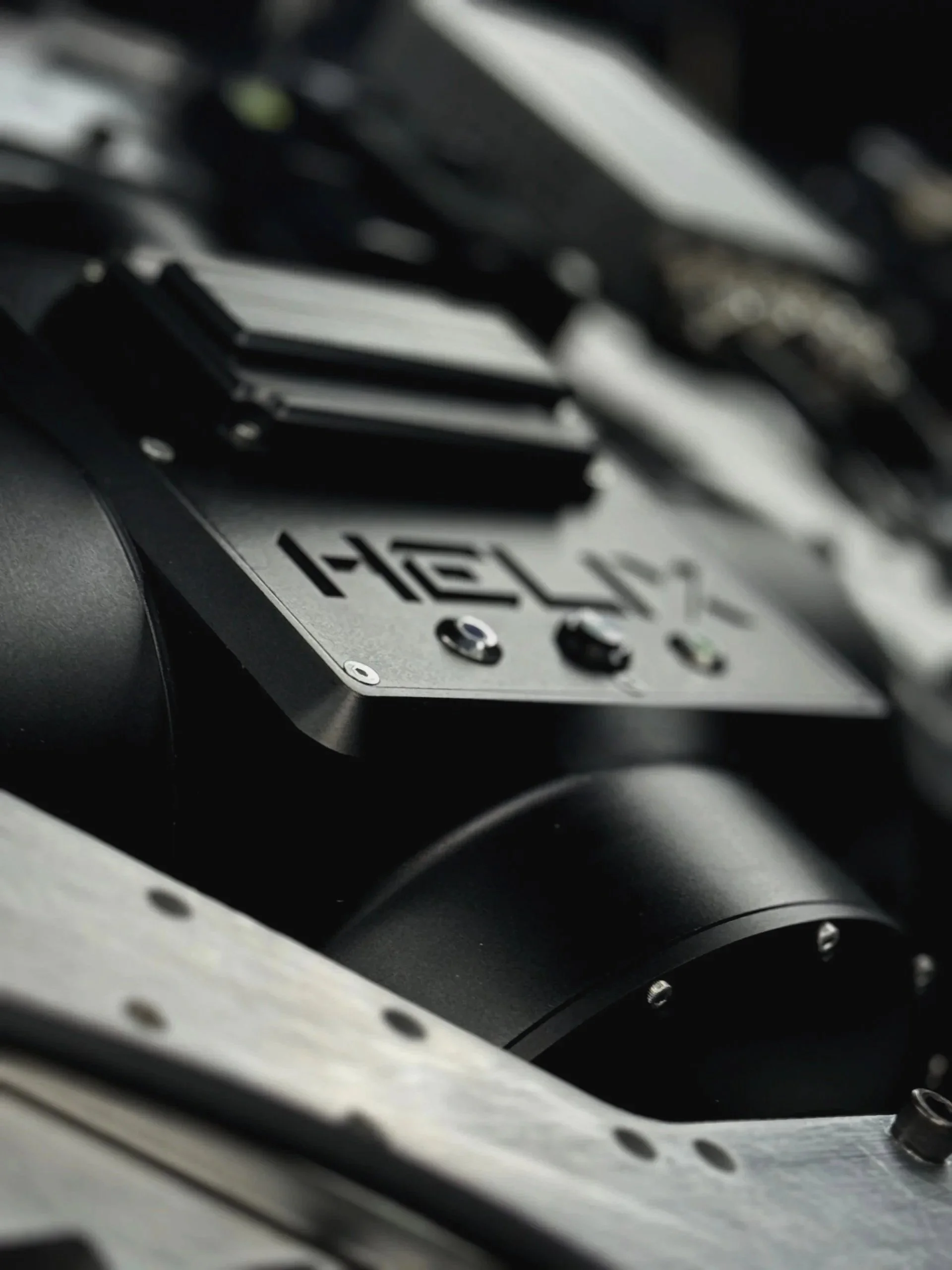
STABILIZATION AS THE FIRST LINE OF DEFENSE
VISION
Ascend Defense reimagines defense procurement by developing HELIX, an autonomous, stabilized, multi-mission sensor and effects platform engineered for long-term relevance in a rapidly evolving technological landscape.
HELIX is explicitly not tied to a single-mission profile, sensor, effector, or autonomy provider. Instead, it is systems-agnostic, allowing immediate integration of any payload requiring advanced stabilization.
HELIX is built as a future-proof platform that separates the stabilization and control architecture from the payload layer. This separation enables seamless and rapid integration of emerging technologies without requiring redesign or replacement of the system itself.
This open-architecture approach ensures that HELIX can incorporate new technologies —including emerging sensors, novel defeat mechanisms, and advanced autonomy — on operational timelines rather than traditional acquisition timelines.
While sensor and effect payloads evolve, HELIX remains foundational to their stability.
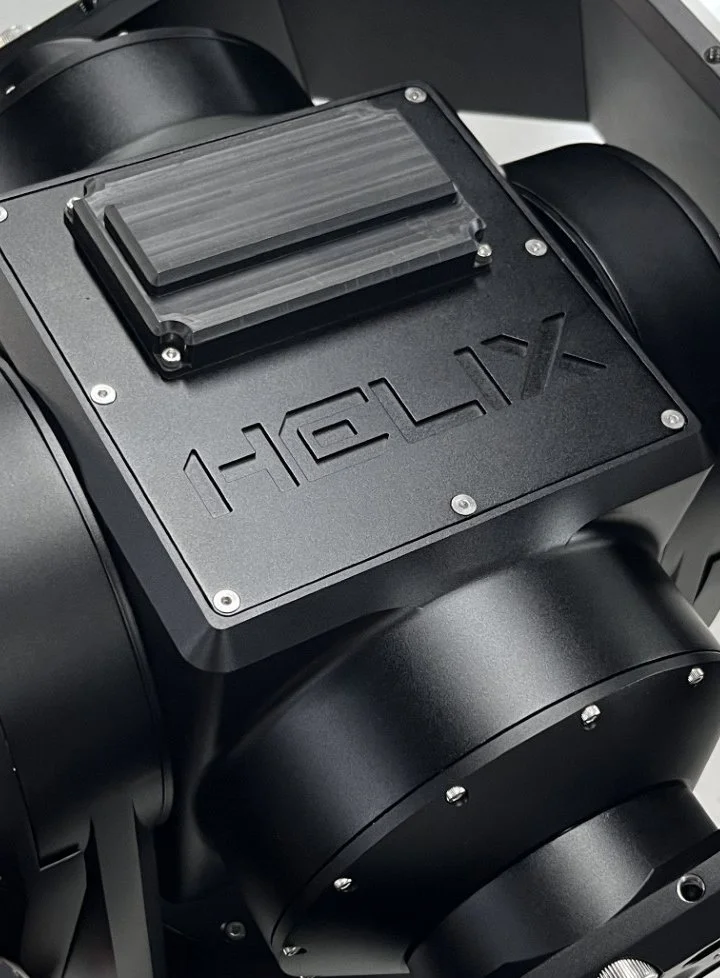
SOLVING THE CHALLENGES OF LEGACY SYSTEMS.
Most stabilized sensor and weapon systems in service today are delivered by prime contractors as closed, single-mission solutions built around fixed technologies. These systems are optimized for long acquisition cycles and are typically fielded with a specific sensor or effector configuration that is difficult and expensive to modify once deployed.
As sensing, autonomy, and counter-technologies evolve on a 12–24 month cycle, legacy systems struggle to keep pace. Upgrades require significant engineering effort, lengthy requalification, and often complete system replacement. This model results in slow adoption of new capabilities, high lifecycle costs, and systems that are technologically obsolete long before the end of their service life.
HELIX’s Open API architecture enables seamless integration and immediate payload changes without redesign or starting over; shortening procurement timelines and reducing costs.
HELIX enables changing payload configuration(s) to match shifting objectives, new effector capabilities, and evolving mission requirements. Built to endure beyond a single campaign, HELIX extends its own lifecycle by adapting over time as objectives evolve.
-
HELIX is designed around a fundamentally different architectural philosophy setting up a new market category; positioning STABILIZATION as the bridge between existing mobile effectors and motion platforms. Rather than tightly coupling stabilization hardware to specific payload technologies, HELIX decouples the stabilization, control, and power core from sensors, effectors, and autonomy software. On its own, HELIX is a completely stand-alone system.
This separation allows HELIX to function as a configurable platform rather than a fixed system. New sensors, kinetic defeat systems, or autonomy capabilities can be integrated as they emerge, without modifying the underlying stabilization architecture. Users will have the ability to make changes to payload configurations across the lifecycle of HELIX based on mixed objectives, payload advancements, or mission evolution.
As a result, HELIX enables operators to evolve capability by changing payloads and software—rather than replacing entire systems — allowing HELIX to outlast the campaign and evolve along with new objectives.
-
HELIX incorporates standardized mechanical, power, and data interfaces that enable third-party payload integration without changes to the stabilization core. The platform is designed to support evolving control interfaces and autonomy frameworks as they mature.
This open-architecture approach ensures that HELIX can incorporate new technologies—including emerging sensors, novel defeat mechanisms, and advanced autonomy—on operational timelines rather than traditional acquisition timelines.
In practical terms, HELIX allows operators to:
• Rapidly deploy new capabilities as threats evolve
• Reduce lifecycle costs by upgrading payloads instead of replacing systems
• Avoid vendor lock-in
• Maintain operational relevance over extended service lives
-
HELIX is sold as a base stabilized platform, with sensors, effectors, and autonomy capabilities integrated through modular packages.
Pricing is structured to maintain disciplined gross margins as integration complexity increases, ensuring commercial sustainability while supporting partner ecosystems.
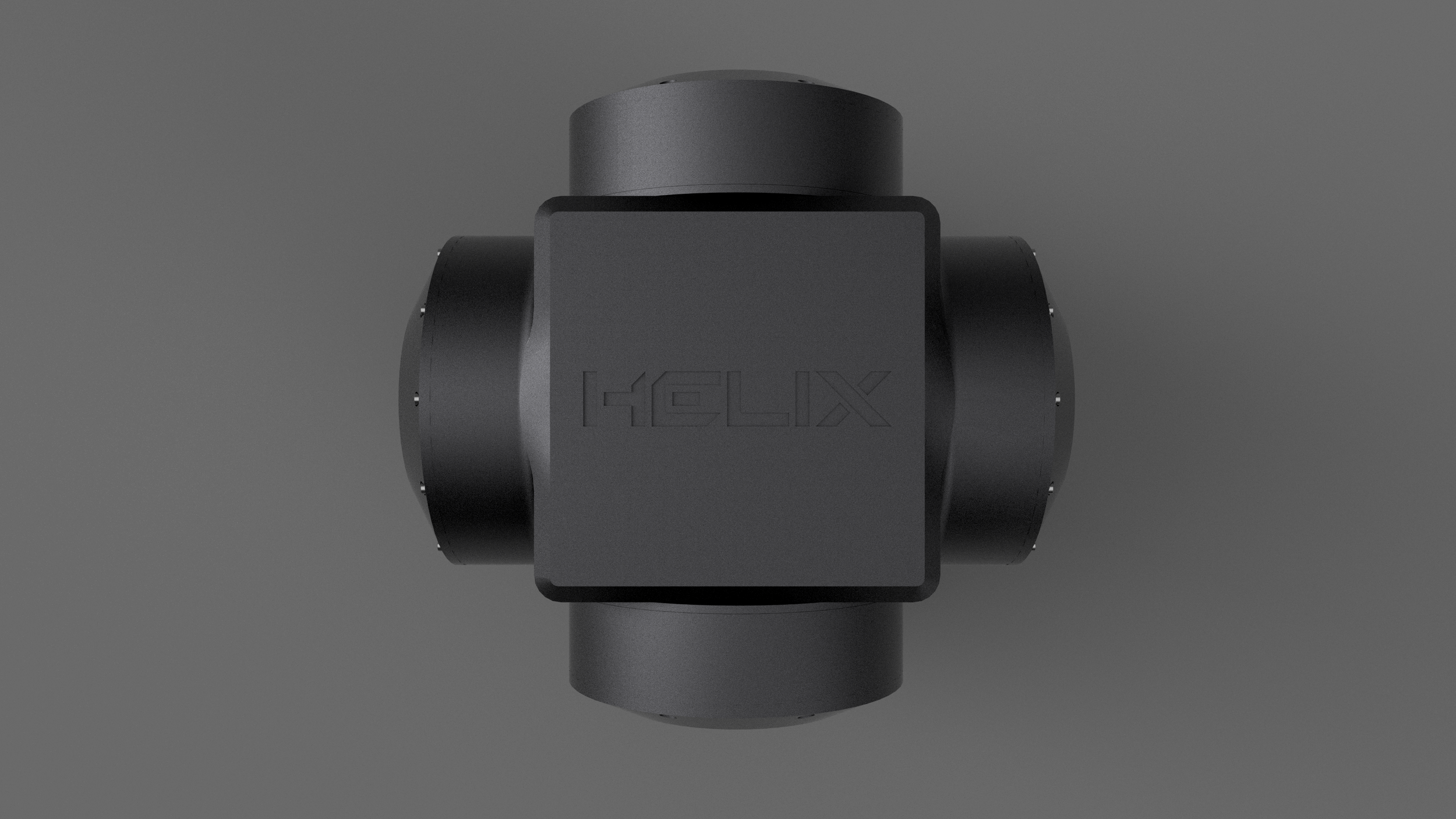
OPEN API
HELIX is designed to integrate any effector or sensor system while interfacing with each effector team’s software developers via open API
US MADE
All HELIX materials and components are sourced and/or made in the United States and are also ITAR compliant.
25LB Form Factor
250LB Payload
100+MPH
OPEN API
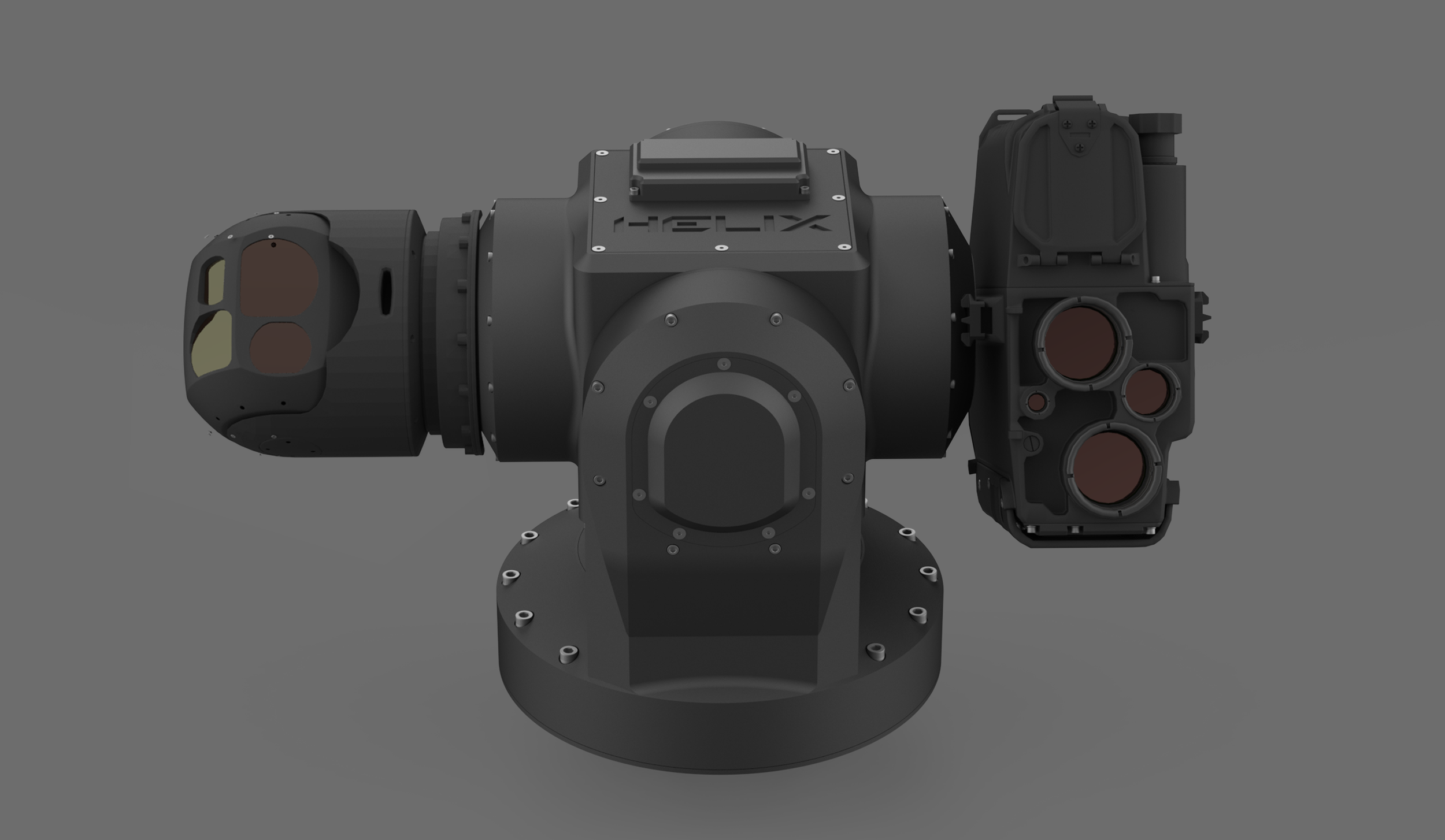
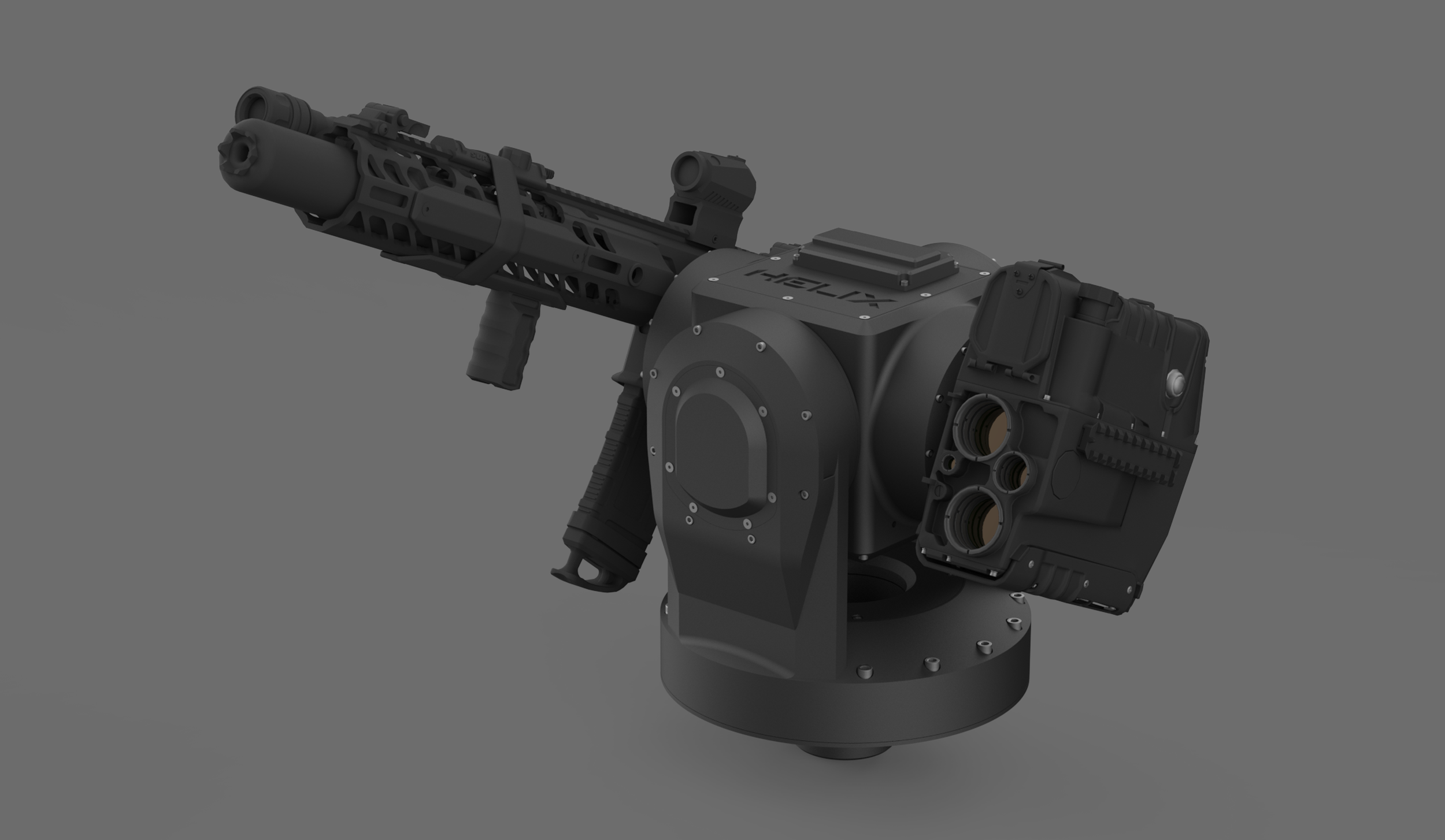
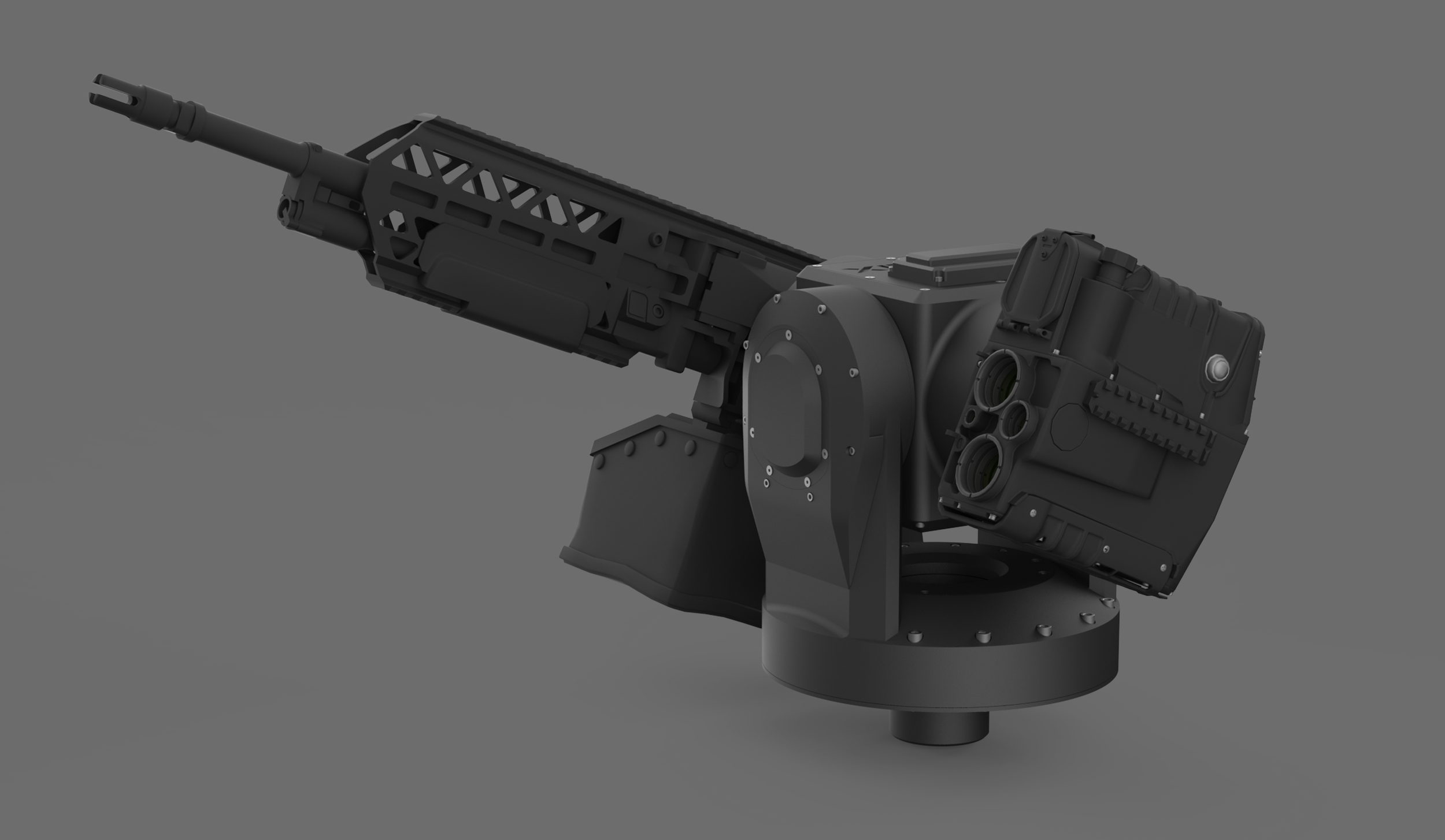
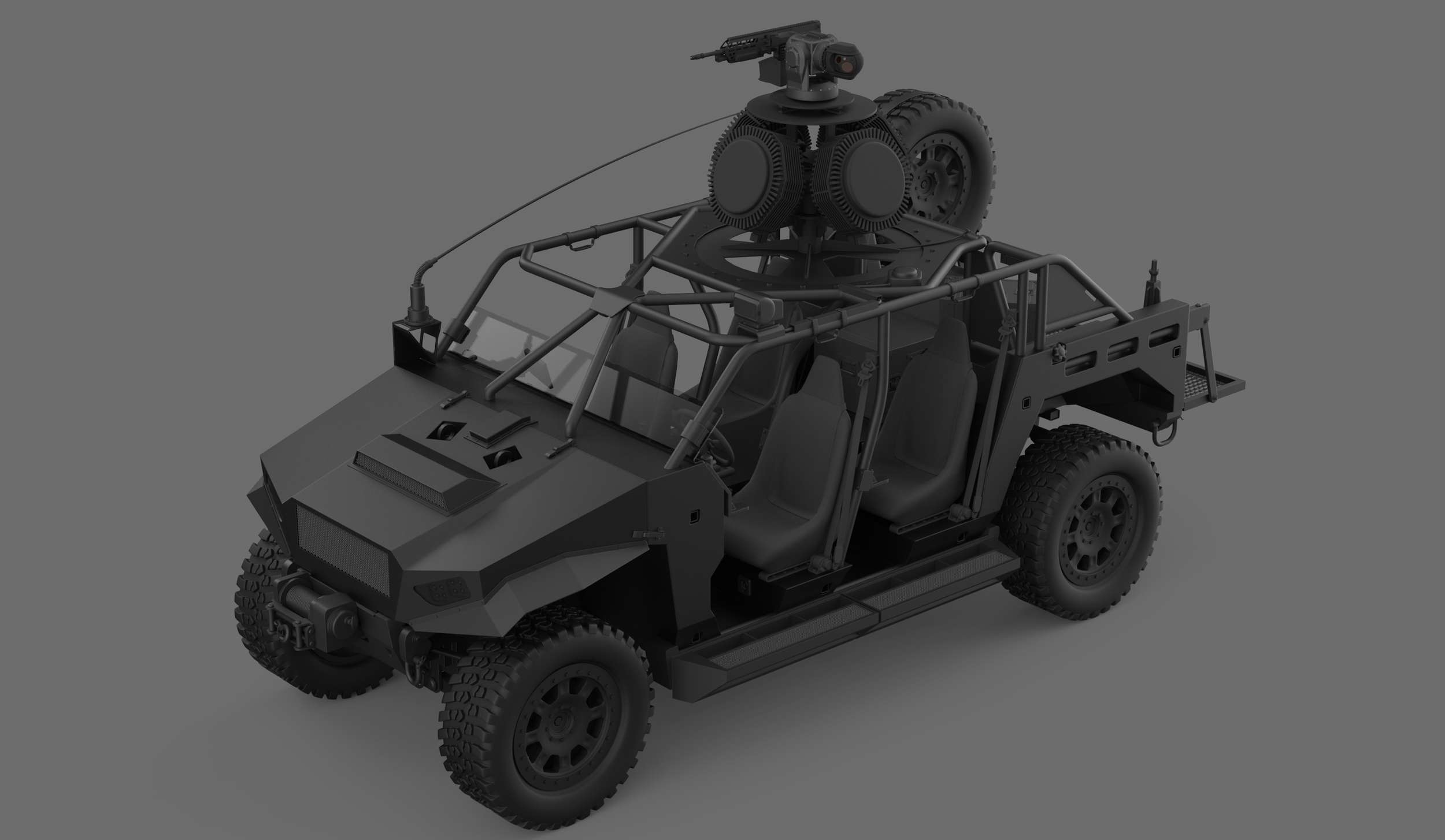
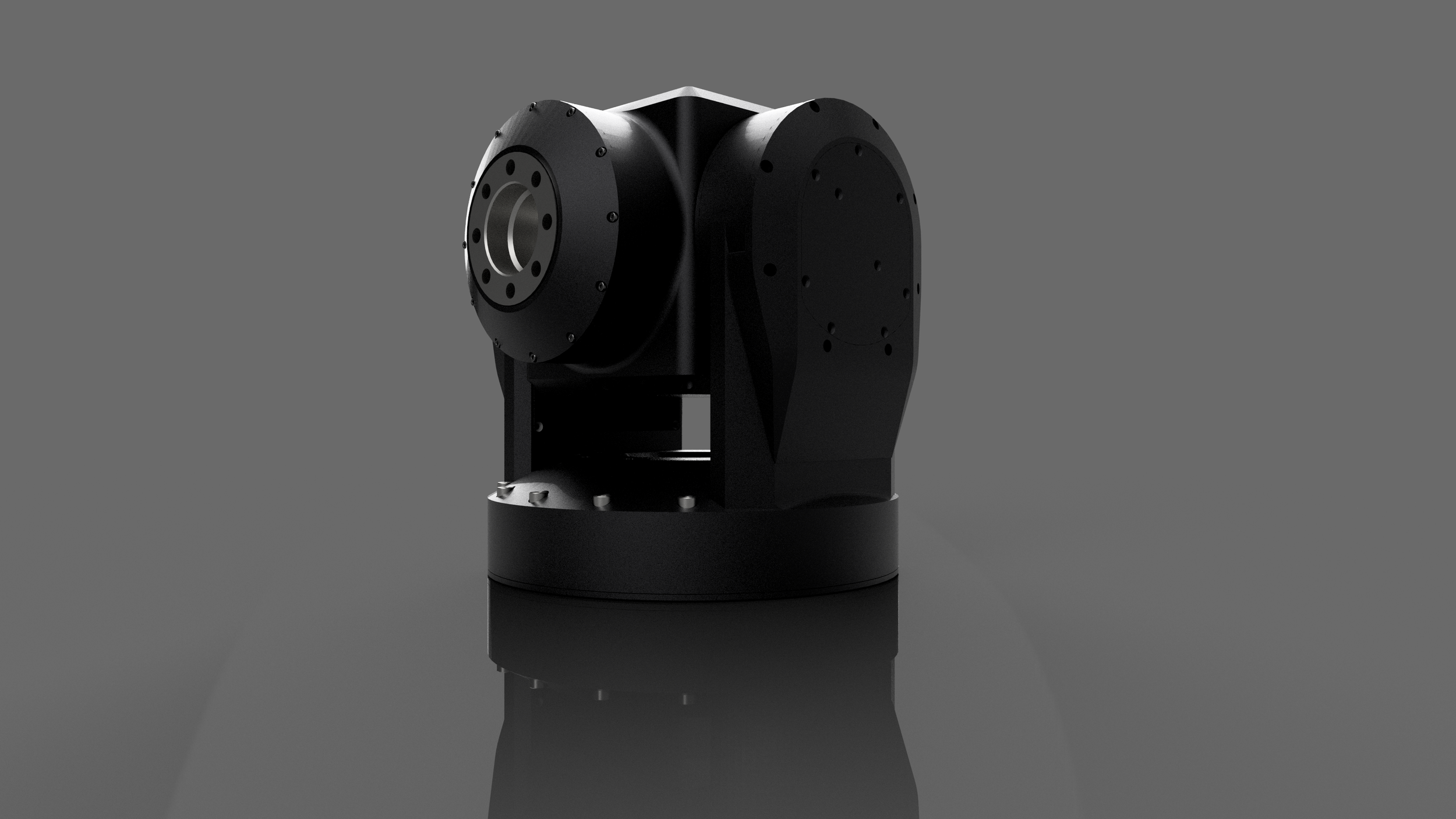
HELIX is a heavy-payload, high-speed, multi-axis stabilized platform capable of supporting up to 250 pounds of combined payload in dual-payload configurations. It is designed for initial deployment on ground vehicles and fixed-site installations, with support for continuous azimuth rotation and stabilized operation at vehicle speeds up to 100 mph.
HELIX supports multiple mission configurations, including:
• Sensor + Sensor
• Sensor + Kinetic Effector
• Kinetic Effector + Kinetic Effector (with offboard cueing)
• Offboard-cued operation using external targeting telemetry
Kinetic engagements in the initial configuration are human-in-the-loop, aligning with operational, ethical, and regulatory expectations.